
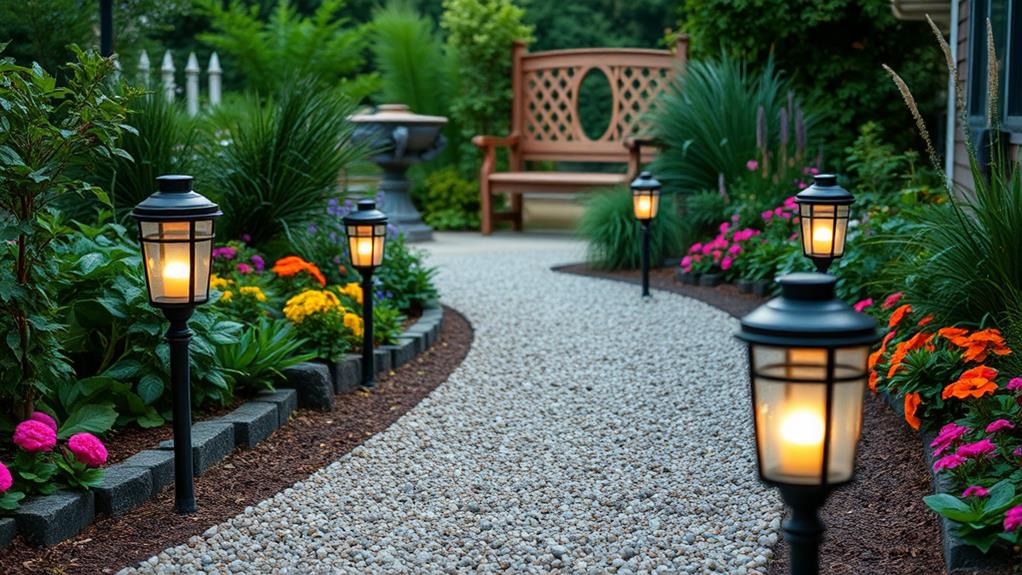
As you step into your outdoor space, you can’t help but notice the lackluster walkway that’s begging for a makeover. You’re on a budget, but that doesn’t mean you must sacrifice style. With a bit of creativity, you can create a beautiful and functional walkway that complements your home’s aesthetic without draining your finances. There are countless ways to upgrade your walkway without depleting your funds, from repurposed materials to clever design tricks. But which option is right for you? Let’s explore the possibilities and start transforming your outdoor space into a stunning oasis.
Planning and Preparation Essentials
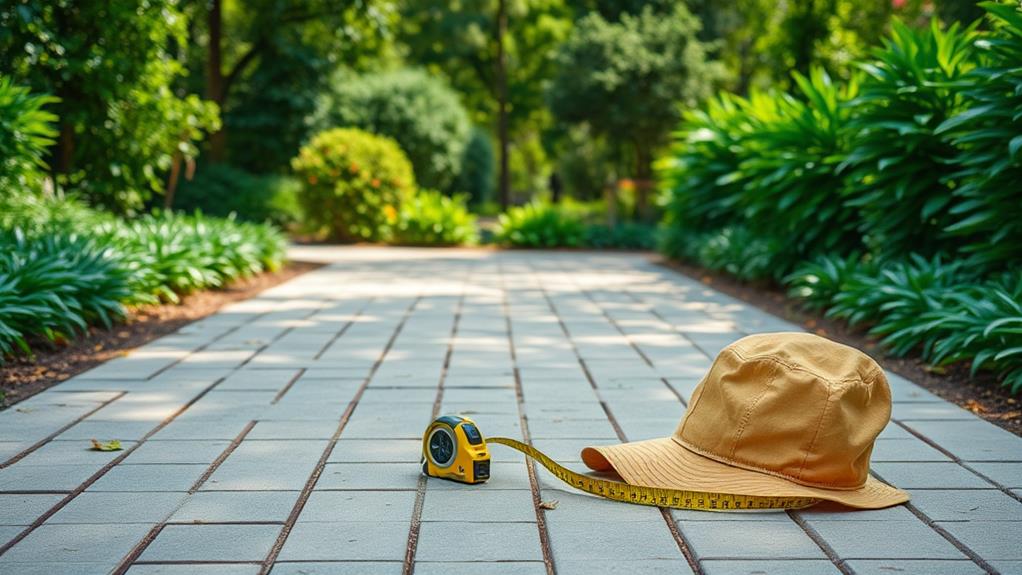
Before embarking on your walkway project, take the time to plan and prepare the area to ensure a successful and cost-effective installation.
Measure the space where the walkway will be built to determine the materials needed. Decide on the design and layout, using a garden hose or string to visualize the shape. Make any necessary adjustments before starting the project.
Create a plan to guarantee a successful and cost-effective walkway installation. Consider the terrain and drainage when selecting materials. By planning and preparing, you’ll avoid costly mistakes and ensure a beautiful, functional walkway that enhances your outdoor space.
Affordable Walkway Materials Guide
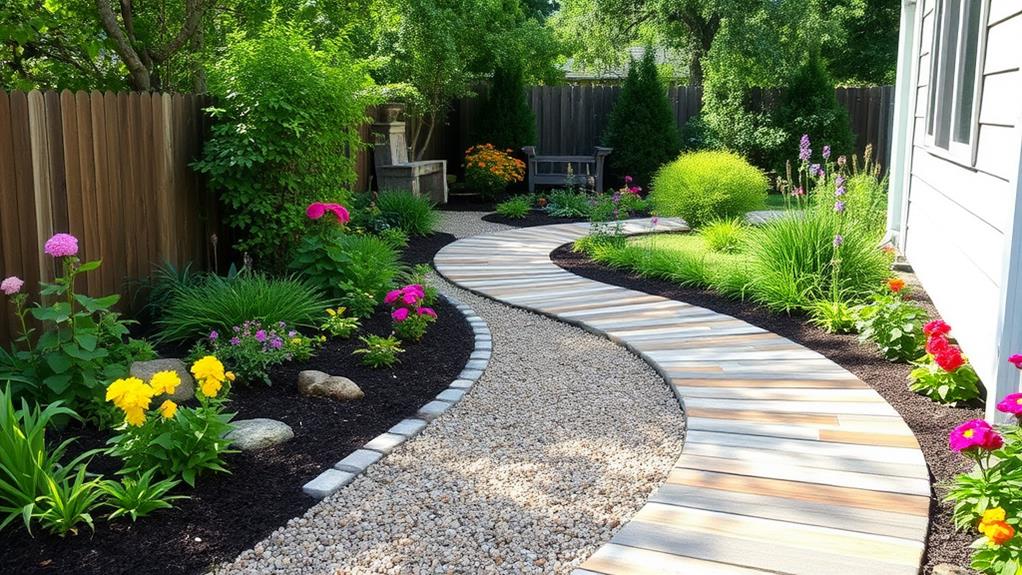
You’ve got numerous affordable pathway material options to choose from, each with its unique benefits, advantages, and installation requirements.
The options are unlimited from gravel to pavers, concrete, and mulch.
- Gravel: Easy to install, affordable, and comes in various colors and textures.
- Pavers: Versatile, durable, and can be arranged in various patterns and designs.
- Mulch: Eco-friendly, low-maintenance, and can be replenished periodically.
When selecting a material, consider terrain, drainage, and personal style.
With the right choice, you can create a beautiful and functional pathway that elevates your outdoor space without straining your finances.
Gravel Walkway Design Ideas
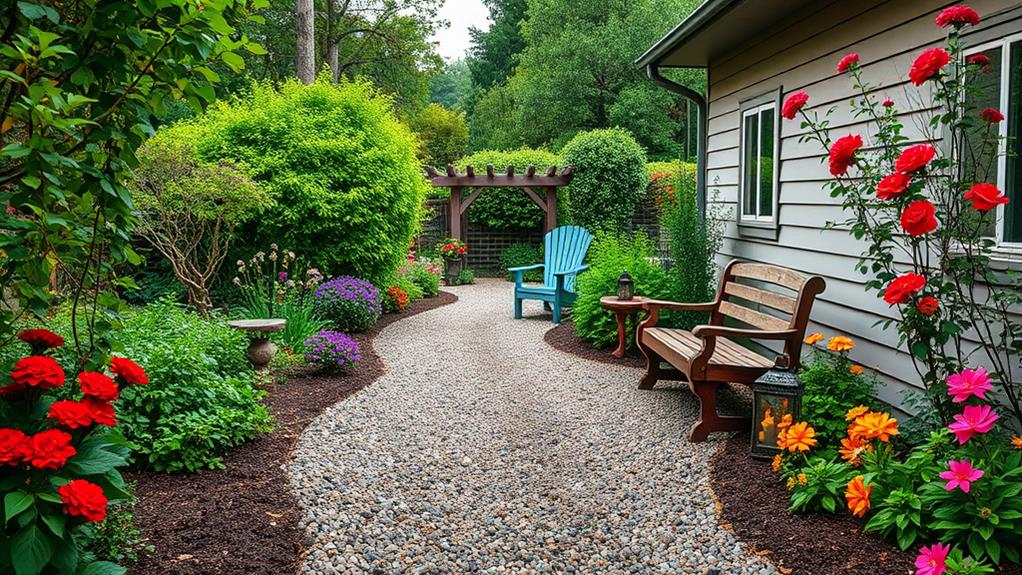
When it comes to creating a beautiful and functional walkway, gravel is an excellent choice, offering a wide range of design possibilities to enhance your outdoor area.
You can select from various colors and textures, such as decomposed granite, crushed gravel, and pebbles, to create a unique look that complements your scenery.
Gravel walkways work beautifully in any design, from modern to rustic, and can be laid out in sloped areas.
Consider incorporating different patterns, such as a winding path or a circular design, to add visual interest.
Additionally, you can use gravel to create a beautiful border or edging that adds a decorative touch to your pathway.
With its low-maintenance and cost-effective benefits, gravel is ideal for your outdoor project.
Paver Walkway Installation Tips
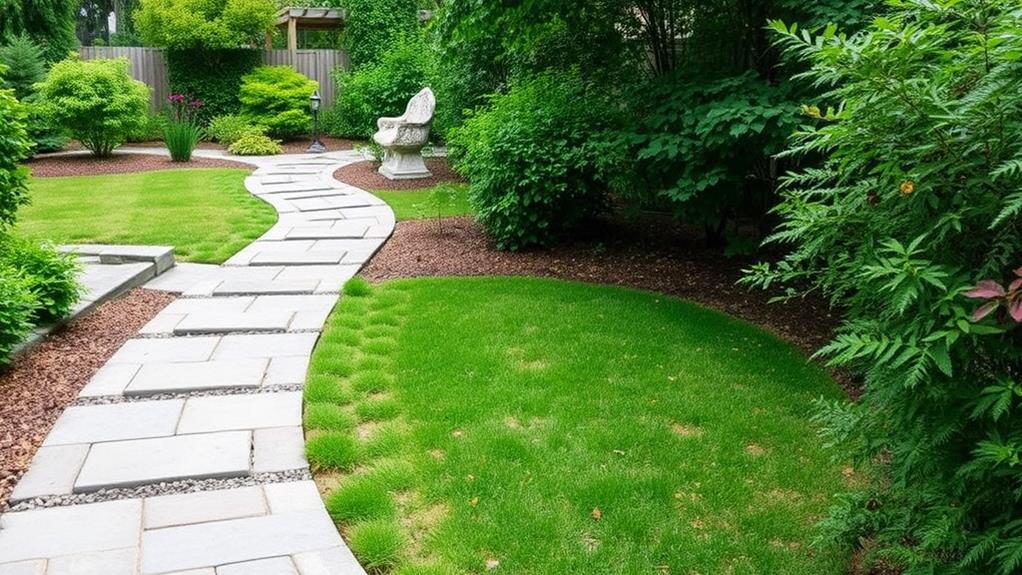
While gravel walkways provide a flexible and low-maintenance option, paver pathways offer a structured and durable alternative for those seeking a more defined look.
When installing a paver walkway, proper planning and preparation are essential.
1. Measure and mark the area: Use a garden hose or string to lay out the shape of the walkway and visualize the design.
Make any necessary adjustments before starting the project.
2. Prepare the base: Lay pavers in a trench filled with crushed stone and sand for a stable foundation.
This will help ensure your walkway remains level and secure.
3. Lay pavers in a pattern: Pavers can be installed in various designs, such as herringbone or brick bond.
Choose a pattern that aligns with your chosen design and budget.
Unique Cobblestone Pathway Ideas
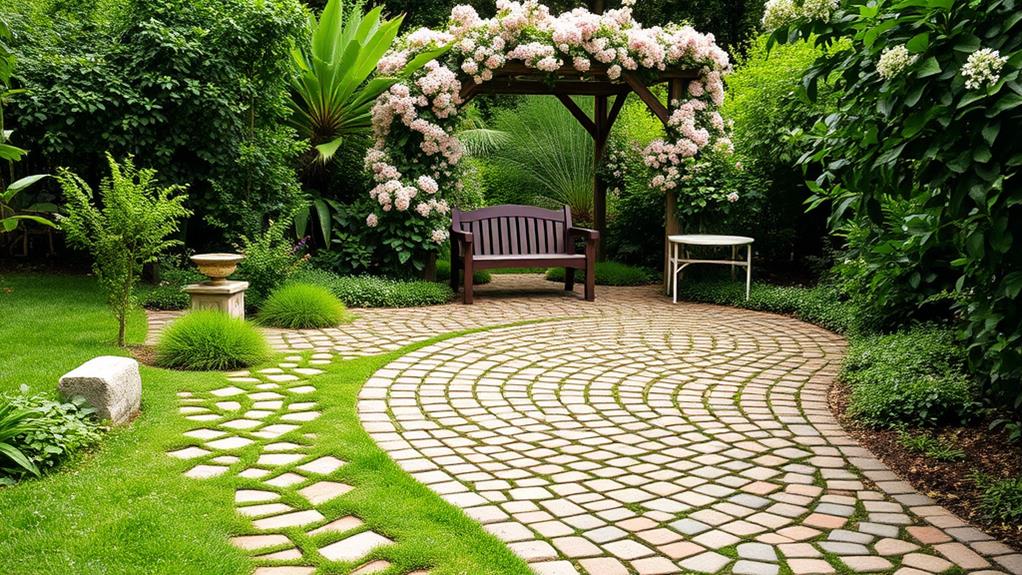
Elegance meets functionality in a cobblestone pathway, where the rustic charm of natural stone converges with the sophistication of a well-crafted walkway.
To create a unique design, combine different cobblestone shapes and colors. Pair irregularly shaped stones with smooth, rounded ones for a visually appealing contrast.
Consider mixing light and dark colors to add depth and interest to your pathway. Incorporating curved lines or circular patterns adds an extra touch of elegance.
With cobblestones, the possibilities are endless, allowing you to craft a one-of-a-kind walkway that reflects your personal style.
Decorative Painted Walkway Designs
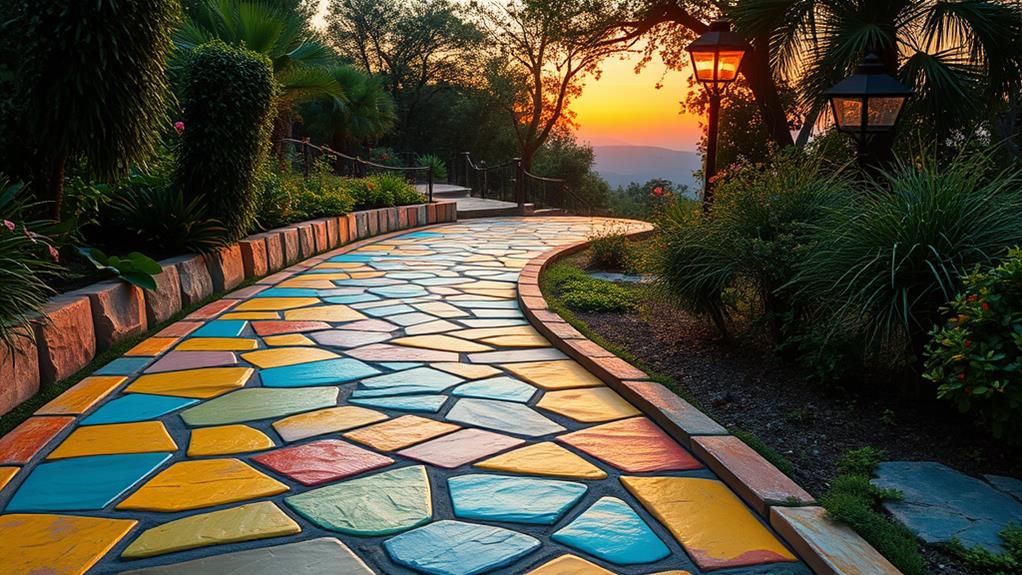
Transform your outdoor area into a vibrant oasis by incorporating decorative painted walkway designs.
With a little creativity, you can turn a dull walkway into a stunning focal point.
- Stenciled stones: Paint stones with unique designs, patterns, or inspiring quotes to add a personal touch to your walkway.
- Colorful paths: Create a winding path using different colors of paint to guide visitors through your outdoor expanse.
- Patterned pavers: Paint pavers with geometric patterns or shapes to add visual intrigue to your walkway.
Classic Brick Walkway Patterns
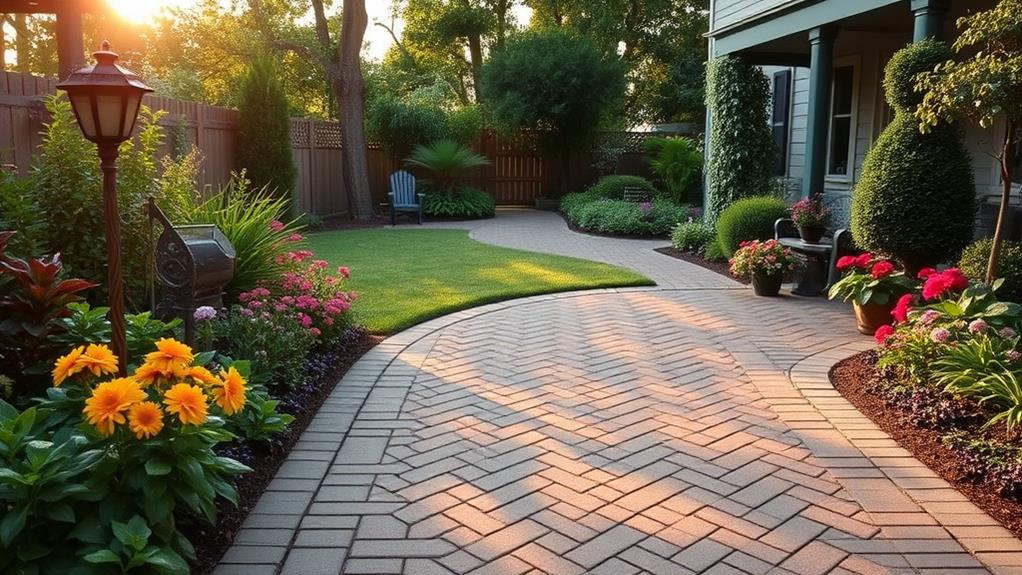
Since ancient times, brick pathways have been a staple of classic outdoor design, exuding a sense of timeless sophistication and refinement.
You can create a stunning walkway by incorporating traditional brick patterns into your design. Brick walkways are durable, long-lasting, and require minimal upkeep.
Install them in various patterns, such as herringbone, running bond, or even a simple straight layout. Bricks can be reused or recycled, making them an eco-friendly option.
To add some visual interest, mix and match different brick colors, textures, or shapes. Classic brick walkway patterns will enhance the aesthetic of your outdoor area, creating a beautiful and inviting pathway that will stand the test of time.
Natural Stone Walkway Options
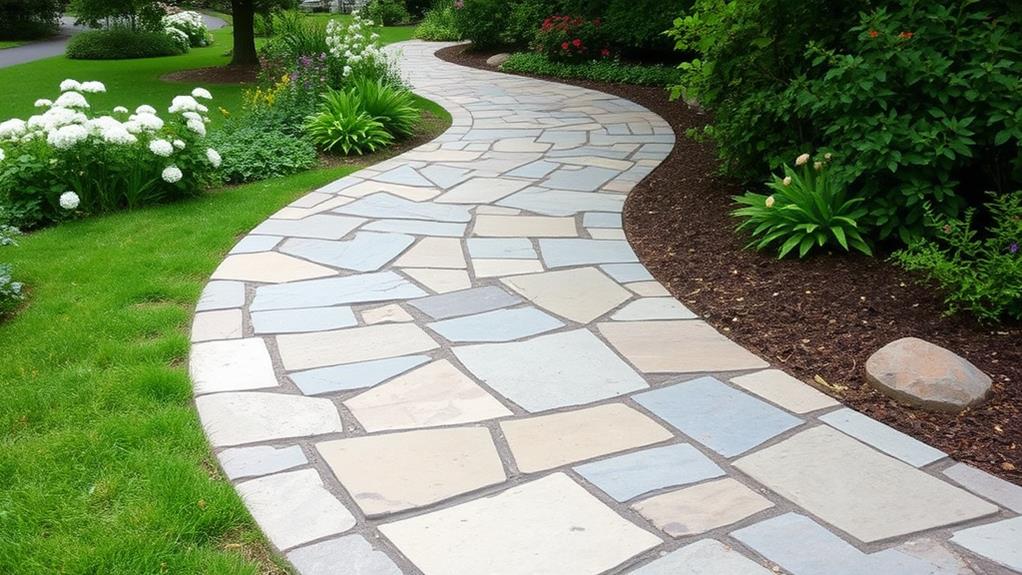
Consider natural stone walkway options to add a touch of sophistication to your outdoor area.
Natural stone walkways offer a unique blend of elegance and durability, making them an excellent choice for homeowners looking to elevate their outdoor design.
1. Bluestone Walkways: Bluestone is a preferred choice for paths due to its durability and slip-resistant surface.
It’s available in various shades of blue and gray, making it easy to find a tone that complements your outdoor environment.
2. Fieldstone Walkways: Fieldstone walkways feature irregularly shaped stones that add rustic charm to your outdoor space.
They’re perfect for crafting a winding path or a more relaxed, natural appearance.
3. Flagstone Walkways: Flagstone walkways are recognized for their flat, layered stones that create a beautiful, organic look.
They’re available in numerous colors and patterns, making it easy to find a style that aligns with your design aesthetic.
Wooden Walkway Installation Guide
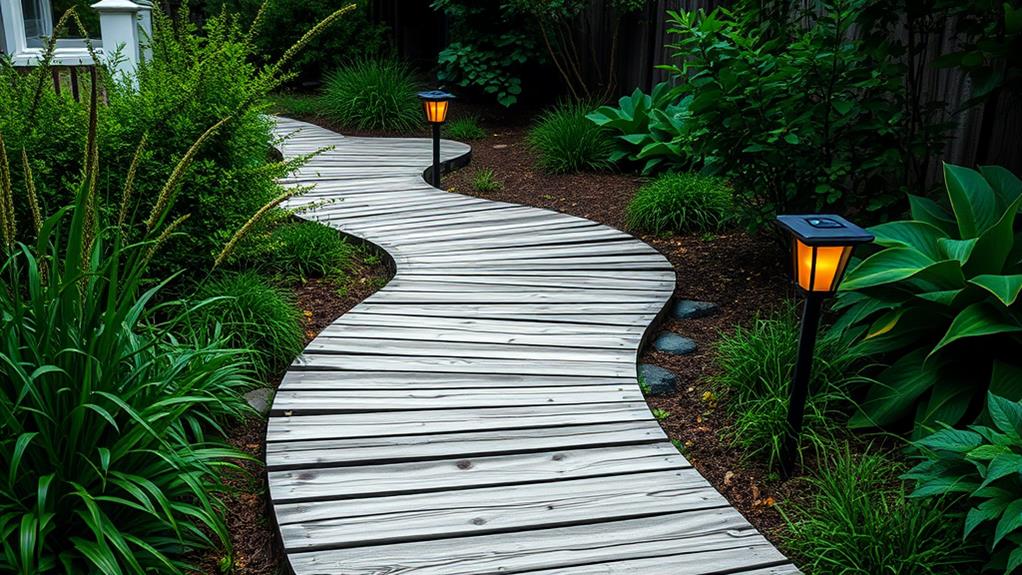
By the time you’re ready to install your wooden pathway, you’ve likely already chosen the perfect type of timber and design to complement your outdoor space.
Now it’s vital to ensure a successful installation. Begin by preparing the site, clearing any debris or vegetation.
Mark the area where you’ll be installing the walkway, considering any obstructions or slopes. Lay down a layer of compacted gravel or sand to provide a stable base.
Then, start installing your wooden planks or boards, using screws or nails to secure them in place. Ensure even spacing and allow for drainage.
Mulch and Concrete Walkway Alternatives
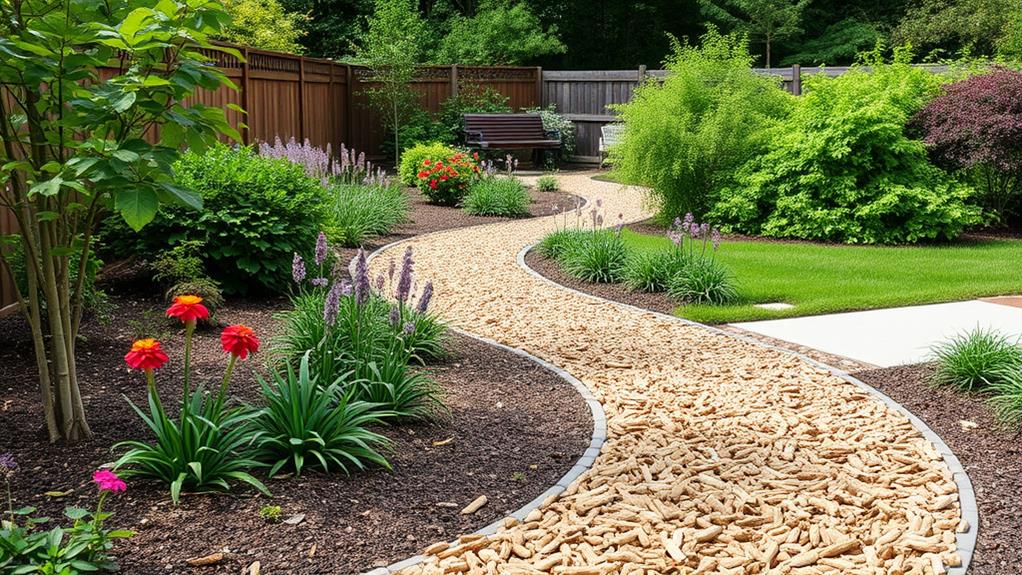
Mulch and concrete walkways offer two more affordable and attractive alternatives to traditional walkway materials.
These options provide a unique and budget-friendly way to enhance your outdoor space.
1. Mulch Walkways: Mulch is an eco-friendly option that can be laid over existing lawns or dirt.
It requires periodic replenishment and comes in various colors and textures.
2. Concrete Walkways: Concrete walkways are durable and low-maintenance.
They can be installed in various colors and textures and stamped or stained for a decorative look.
3. Combination Walkways: Consider a blend of mulch and concrete to create a visually appealing, cost-effective walkway.
This combination adds texture and interest to your outdoor area.
These alternatives offer a fresh take on traditional walkway materials, allowing you to create a unique and inviting outdoor space without exhausting your finances.
Frequently Asked Questions
What materials are the most cost-effective for walkways?
Gravel, mulch, and concrete are among the most cost-effective materials for building walkways. They offer durability, style, and flexibility in design. Gravel provides a natural look and is easy to maintain, while mulch is eco-friendly and low-cost. Concrete is ideal for a long-lasting solution with various decorative options.
How do I maintain my DIY walkway?
Maintenance for your DIY walkway varies based on the materials used. Gravel may require periodic raking and replenishment, while mulch needs regular replenishment, especially after heavy rains. Concrete may need occasional cleaning and resealing to maintain its appearance and durability. Ensuring proper drainage can also prolong the life of your walkway.
Can I install a walkway on a slope?
Yes, walkways can be installed on slopes, but proper planning and materials are crucial. Choose sturdy materials like pavers or stone that can withstand shifting. It’s also wise to ensure proper drainage to prevent erosion and ensure safety on inclined paths.
How do I choose the right design for my walkway?
Choosing the right design for your walkway involves considering your home’s style, the function of the path, and the surrounding landscape. Consider patterns that complement your yard’s aesthetic and materials that harmonize with your outdoor features. Sketch ideas, and visualize them before making decisions.
Conclusion
You’ve now got 10 affordable pathway ideas to transform your outdoor space. You’re ready to create a beautiful and functional road from aggregate to wooden boards and from classic brick patterns to unique pebblestone designs. Remember to plan carefully, choose the right materials, and don’t hesitate to add your personal touch. With these DIY pathway ideas, you’ll enjoy your new outdoor space in no time!